Disstonian Institute
Quick Glance Guide to Disston Handsaw Models
|
|
Disstonian Institute |
|
| Handle Profile |
Model Number with links to more information |
Characteristics and Manufacturing Dates |
Notes |
|
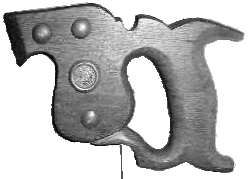
No. 7 | beech handle, four nuts (full size), three nuts (panel saw) 1840-1928 | commonly found, the basic Disston model for decades |
| No. 8 | apple handle, four nuts (full size), three nuts (panel saw) ca. 1845-1918 | much less common saw than the No. 7. | |
|
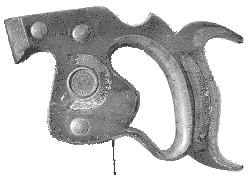
No. 7 rip saw, 28" or longer | beech handle, four nuts, rounded top for second hand | same as above, but with stout "Centennial" handle |
| No. 8 rip saw, 28" or longer | apple handle, four nuts, rounded top for second hand | same as No. 8 above, but with stout handle. Scarce variant of an uncommon saw. | |
|
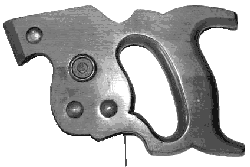
D-7 | beech handle, four nuts, 1928-1955 | common basic-model saw, replaced original No. 7 |
|
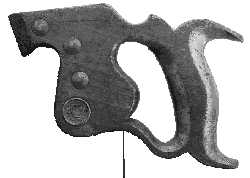
No. 76 (Centennial) | apple handle, four nuts (full sized), three nuts (panel saw), medallion screw in lowest position, skewback blade, ca.1876-1923 | not commonly found |
|
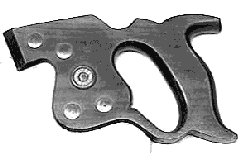
D-8 | apple covertop, "let-in" handle, five nuts (full size), four nuts (panel saw), skewback blade, 1880's-1955 | common, high quality saw |
| D-16 | apple covertop, "let-in" handle, five nuts (full size), straight-back blade, 1928-~1930 | uncommon saw offered briefly | |
|
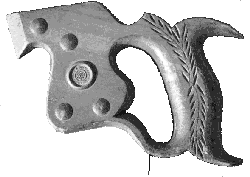
No. 120 (Acme) | carved apple handle, skewback blade, extra taper, no set on specially-filed teeth, 1876-1928. D-120 model sold 1928-about 1930. | shape similar to D-8. less common cabinetmaker's saw, meant for use on dry hardwoods only. 28" ripsaw had thumbhole handle |
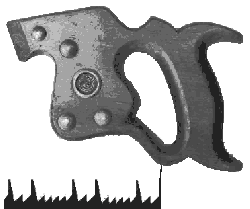 |
D-17, D-117 (Double Duty) | "hardwood" handle, alternating groups of rip and crosscut teeth, 1918-about 1948. | uncommon saw, meant for rough carpentry |
|
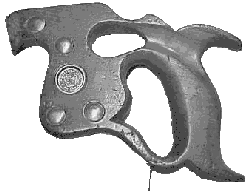
D-8 with Dual Grip (thumbhole) | 26" or longer, apple handle, five nuts, skewback blade, 1880's-late 1940's | offered as a crosscut, but almost always a rip saw |
| D-100 (see below) | rip saw with carved handle | other details same as D-100 saw | |
| No. 120 Acme (see above) | 28" ripsaw with carved handle | other details same as No. 120 saw | |
|
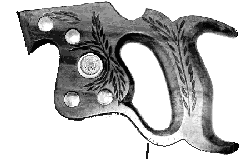
D-100 | carved apple handle, five nuts (full size), four nuts (panel saw), skewback blade, 1899-1923 | looks like a D-8 with a carved handle. far less common than the D-8. ripsaw available with thumbhole handle |
|
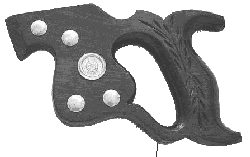
D-15, D-115 "Victory" | carved handle similar to D-8 and D-100 shape, but made of rosewood, 1915-1928 | later more common "Victory" saws had rosewood handles shaped like the D-23 (see below) |
|
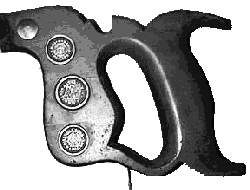
No. 99 | apple handle, four nuts, three of them medallions, ca.1865-1918 |
later 1888-ca.1902 model with "let-in" handle shown. earlier model had handle similar to No. 9. ca.1902-1918 saw looked much like a No. 16 with different saw nut layout. (see below) uncommon saw, especially the pre-1902 configurations. |

|
No. 99 | apple handle, four nuts, ca.1902-1918 |
redesign of the No. 99. ca.1902-1918 saw looked much like a No. 16 with different saw nut layout. uncommon saw. |
|
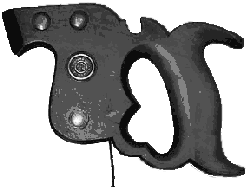
No. 9 | apple handle, four nuts, straight back blade, ca.1845-1918 | uncommon saw, handle looks like a No. 12 without carving |
|
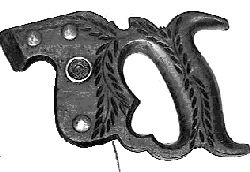
No. 12, 112 | carved apple handle, four nuts (full size), three nuts (panel saw), straight back blade, ca.1865-1928 | less common than some models, but not hard to find. also an uncommon No. 112 made with skewback blade, 1903-1923 |
|
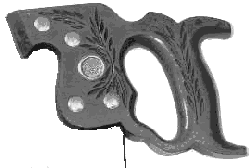
D-12 | carved apple handle, walnut after WWII, five nuts, straight back blade, 24" and 26" lengths, 1928-1953 | replaced the original No. 12 |
|
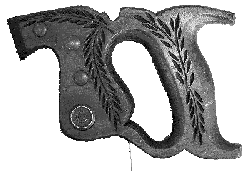
No. 16 (New 16) |
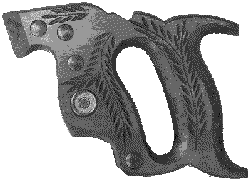
carved apple "let-in" handle, four nuts (full size), three nuts (panel saw), straight back blade, 1880-1928 | less common than the No. 12. D-16 sold for a short time after 1928 with characteristics like other saws in the line at that time |
|
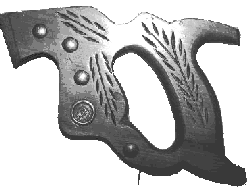
D-20, D-21, D-22, D-23 (pre-1928) | carved apple "let-in" handle, five nuts. Four on panel saw. | D-23 made 1911-1990, very common. D-20 much less common, discontinued in 1928. D-21 and D-22 not commonly found |
|
D-23 (after 1928) | same features as earlier D-23 with modified, covertop handle shape. carved "let-in" handle, five nuts. four on panel saw. | very common, good user saw |
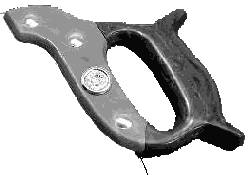
| D-15, D-115, D-42, D-43 (Victory) |
D-115, 1928-1945; D-15, 1928-1951; rosewood handle until 1947, plywood late 1940's, rosewood early 1950's. D-42, D-43, WWII-era. walnut handle with red lacquer. |
handle shape same as D-23. earlier Victory saws had handle shape similar to D-8 and D-100 (see above) | |
|
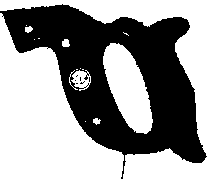
D-95 (Masterpiece) | plastic handle 1935-ca.1954. rosewood handle in 1955, discontinued soon after. | handle made of Tenite, a Kodak-owned product, called Disstonite in sales literature. advertised as a top-quality saw. not this author's go-to saw, however. |
|
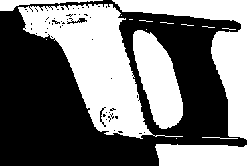
D-111 | black nylon handle. ca. late 1950's-early '60's HK Porter-era product. | It is said to be the last saw model made in Philadelphia plant. I've not seen anything that documents that claim. |
|
D-100 | aluminum handle with wood infill, 1961-66 HK Porter-era product. | I doubt Henry Disston would have put his name on this saw in his lifetime. My hands get blisters just looking at the handle. It's not to be confused with the more traditional D-100 sold earlier in the century (see above) |
 [BACK HOME] [BACK HOME]

|
Quick Glance Guide to Disston Handsaw Models |